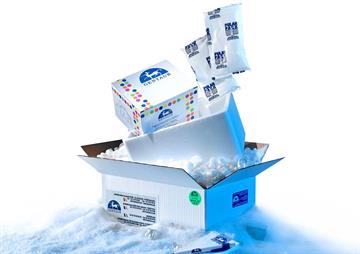
- EXPRESNÉ DORUČENIE DO 24–48 HODÍN
Anti-Histone H3 (acetyl K27) Antibody
Cena : Požiadajte o cenovú ponuku
1
Eukaryotic histones are basic and water soluble nuclear proteins that form hetero-octameric nucleosome particles by wrapping 146 base pairs of DNA in a left-handed super-helical turn sequentially to form chromosomal fibers. Two molecules of each of the four core histones (H2A, H2B, H3 and H4) form the octamer, which is comprised of two H2A-H2B dimers and two H3-H4 dimers, forming two nearly symmetrical halves by tertiary structure. Histones are subject to posttranslational modification by enzymes primarily on their N-terminal tails, but also in their globular domains. Human and mouse Histone H4 are subject to methylation at Lys 20, a modification that may be necessary for select DNA transactions or chromatin state transitions.
Detaily produktu
Katalógové čísloHA500046
KategóriaObchod a priemysel > Veda a laboratorium
DodávateľHUABIO
Veľkosť100ul
Typslobodný
Ref: STJ90125
Anti-Histone H3 (Acetyl K27) antibody
Ref: HA600047
Anti-Histone H3 (acetyl K27) Antibody [A6D7]
Ref: HA600048
Anti-Histone H3 (acetyl K27) Antibody [A6D6]
Ref: 1791-100uL
Anti-Histone H3 (acetyl K27) Rabbit Monoclonal Antibody
Ref: 1775-100uL
Anti-Histone H3 (acetyl K14) Rabbit Monoclonal Antibody
Ref: MBS8241885-02mL
Anti-Histone H3 (AcK4) Acetyl Antibody
Najnovšie články
10
aug
Technika RISA – analyza medzigenovych sekvencii ribozomalnej RNA
Co je RISA? RISA (Ribosomal Intergenic Spacer Analysis) je metoda pouzivana na analyzu roznych typov...
Čítať viac
03
aug
Co je virus RSV? Ochorenie nielen deti
V poslednom obdobi coraz castejsie pocuvame o viruse RSV. Spolu s virusom chripky a koronavirusom pa...
Čítať viac
14
júl
Gene knockout – významná genetická metóda pre ľudí so záujmom o vedu
V roku 2007 získali Nobelovu cenu za fyziológiu alebo medicínu Mario R. Capecchi (USA), Sir Martin E...
Čítať viac
Slim Fit Plastic Coat
Qty :
TOTAL : € NaN
€120.52

€85.68

€69.34

€60.64
€60.2
€85.05
€60.08
€78.63

Slim Fit Plastic Coat
€120.52
colors
please select a Color
size
- S
- M
- L
- XL
- XXL
please select size
product details
- Brand : Zara
- Category : Blazers