- EXPRESNÉ DORUČENIE DO 24–48 HODÍN
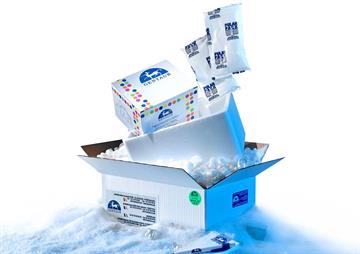
HLA-DRA ELISA Kit (Human) (OKCA00694)
Cena :Požiadajte o cenovú ponuku
Na skladeDescription of target: Binds peptides derived from antigens that access the endocytic route of antigen presenting cells (APC) and presents them on the cell surface for recognition by the CD4 T-cells. The peptide binding cleft accommodates peptides of 10-30 residues. The peptides presented by MHC class II molecules are generated mostly by degradation of proteins that access the endocytic route, where they are processed by lysosomal proteases and other hydrolases. Exogenous antigens that have been endocytosed by the APC are thus readily available for presentation via MHC II molecules, and for this reason this antigen presentation pathway is usually referred to as exogenous. As membrane proteins on their way to degradation in lysosomes as part of their normal turn-over are also contained in the endosomal/lysosomal compartments, exogenous antigens must compete with those derived from endogenous components. Autophagy is also a source of endogenous peptides, autophagosomes constitutively fuse with MHC class II loading compartments. In addition to APCs, other cells of the gastrointestinal tract, such as epithelial cells, express MHC class II molecules and CD74 and act as APCs, which is an unusual trait of the GI tract. To produce a MHC class II molecule that presents an antigen, three MHC class II molecules (heterodimers of an alpha and a beta chain) associate with a CD74 trimer in the ER to form a heterononamer. Soon after the entry of this complex into the endosomal/lysosomal system where antigen processing occurs, CD74 undergoes a sequential degradation by various proteases, including CTSS and CTSL, leaving a small fragment termed CLIP (class-II-associated invariant chain peptide). The removal of CLIP is facilitated by HLA-DM via direct binding to the alpha-beta-CLIP complex so that CLIP is released. HLA-DM stabilizes MHC class II molecules until primary high affinity antigenic peptides are bound. The MHC II molecule bound to a peptide is then transported to the cell membrane surface. In B-cells, the interaction between HLA-DM and MHC class II molecules is regulated by HLA-DO. Primary dendritic cells (DCs) also to express HLA-DO. Lysosomal microenvironment has been implicated in the regulation of antigen loading into MHC II molecules, increased acidification produces increased proteolysis and efficient peptide loading. ;Species reactivity: Human;Application: ;Assay info: Assay Methodology: Quantitative Sandwich ELISA;Sensitivity: 4.68 pg/mL
Detaily produktu
Katalógové čísloOKCA00694
KategóriaObchod a priemysel > Veda a laboratorium
DodávateľGentaurAviva Systems Biology
Veľkosť96 Wells
Typslobodný
Požiadať o ponuku alebo dokumenty
Vyberte, čo potrebujete, a my sa vám ozveme
Ref: OKCA00694-96W
OKCA00694-96W - HLA-DRA ELISA Kit (Human)
Ref: OKCA01296
HLA-DPA1 ELISA Kit (Human) (OKCA01296)
Ref: EF010147
HLA-DRA ELISA KIT|Human
Ref: ELI-32841h
Human HLA-DRA ELISA KIT
Ref: OKCA01399
NYX ELISA Kit (Human) (OKCA01399)
Ref: OKCA00615
ASB2 ELISA Kit (Human) (OKCA00615)
Najnovšie články

31
aug
Čo je to autoimunita?
V mnohých médiách čoraz častejšie počujeme o autoimunitných ochoreniach alebo o samotnej autoimunite...
Čítať viac
20
aug
Apsik! Tak co je alergia?
S prichodom leta zacina kvitnut mnozstvo rastlin. Pocet pelovych zrn vo vzduchu sa zvysuje a vcely i...
Čítať viac
14
aug
Medicinska analytika – odbor pre ludi so zaujmom o vedu
Kazdy rok stoja maturanti pred dolezitym rozhodnutim, aky studijny odbor si vybrat a ake povolanie c...
Čítať viac
Slim Fit Plastic Coat
Qty :
TOTAL : € NaN
€120.52

€85.68

€69.34

€60.64
€60.2
€85.05
€60.08
€78.63

Slim Fit Plastic Coat
€120.52
colors
please select a Color
size
- S
- M
- L
- XL
- XXL
please select size
product details
- Brand : Zara
- Category : Blazers